
From Jobsite to Gone: Build Scrap Removal Into Your Install Closeout
Oct 12, 2026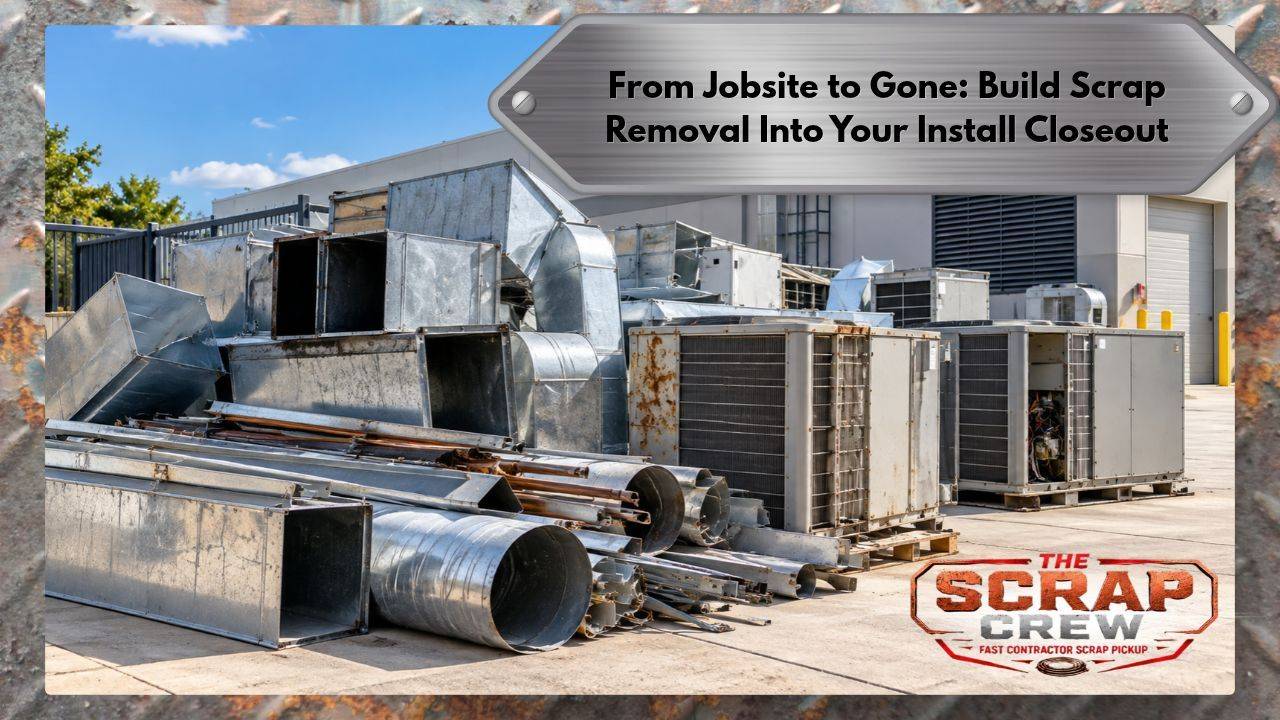
Every HVAC install creates a second job.
The system is set. The startup is done. The customer is happy.
Then the old unit, line set scraps, sheet metal, pallets, packaging, and random jobsite leftovers become somebody’s problem.
Too often, that somebody is whoever has room in the truck, time at the end of the day, or patience to deal with it later.
That is not a process. That is friction.
Scrap removal should not be figured out after every installation. It should be built into your standard closeout process.
Why scrap belongs in the SOP
Install teams run better when the end of the job is predictable.
When scrap removal is not part of the plan, it creates small delays that stack up fast:
- Crews load old equipment they should not have to haul
- Trucks lose usable space
- Shops turn into scrap storage
- Managers waste time coordinating one-off dump runs
- Closeouts stay messy longer than they should
The answer is not to work harder. The answer is to make scrap removal normal.
Add it to the install closeout checklist. Assign the steps. Document what is leaving the site. Schedule pickup when needed.
That turns scrap from an annoying afterthought into a repeatable operation.
A simple HVAC scrap removal closeout SOP
You do not need a complicated system. You need a clear one.
Use this as a starting point.
1. Identify what was removed
Before the crew leaves the jobsite, identify the removed equipment and scrap materials.
That may include condensers, air handlers, furnaces, coils, ductwork, stands, sheet metal, copper, electrical scrap, pallets, and packaging.
The goal is simple: know what needs to leave before it becomes clutter.
2. Stage it safely
Designate a safe staging area on the jobsite or at the shop.
Keep walkways clear. Keep customer property protected. Keep equipment away from areas where it can create a trip hazard, block access, or make the job look unfinished.
Scrap should never be scattered across the site because “someone will get it later.” Later is where process goes to die.
3. Confirm regulated work is handled properly
Before pickup, confirm any regulated prep is completed by qualified HVAC professionals.
That includes refrigerant recovery or other regulated HVAC work that must be handled according to applicable rules, licensing, and safety requirements.
Scrap pickup should happen after the equipment is properly prepared for removal.
Do not blur that line. Keep regulated HVAC work with qualified HVAC pros.
4. Contact and schedule pickup
Once the scrap is identified, staged, and ready, schedule pickup.
This can be job-by-job, but the better model is a repeatable cadence.
If your crews are doing steady installs, scheduled or recurring Scrap Crew pickups can help keep old equipment and metal moving out without constant manager babysitting.
5. Document and close out
Add a simple documentation step.
Take a photo of the staged scrap. Note what was removed. Confirm pickup was requested or completed. Attach it to the job record if your team uses a CRM or field service platform.
This protects the crew, helps the office, and gives managers visibility.
6. Keep crews focused
Your installers should be installing.
Every hour spent hauling scrap, hunting for space, or making side trips is time pulled from revenue-producing work.
A clean scrap process keeps technicians focused on closeout, customer handoff, and the next job.
Make it repeatable
The best SOPs remove decisions.
Your team should not have to ask the same questions after every install:
- Where does this old unit go?
- Who is taking it?
- Is the shop already full?
- Can we fit it in the truck?
- Did anyone schedule pickup?
Build the answers into the process.
When scrap removal is part of closeout, the job ends cleaner. The crew moves faster. The shop stays more organized. Managers spend less time chasing loose ends.
That is the point of an SOP.
Build scrap pickup into your process
The Scrap Crew helps HVAC contractors turn scrap removal into a repeatable pickup process.
Use us to support your install closeout SOP, reduce one-off coordination, and keep crews focused on the work they were hired to do.